


Understanding Knife Anatomy
Before delving into sharpening techniques, it is essential to understand the anatomy of a knife. A knife primarily consists of the blade, edge, spine, heel, tip, and handle. The edge, where the cutting action occurs, is defined by its angle and sharpness. The blade’s material can vary from stainless steel to carbon steel, influencing sharpening approaches.
Types of Knife Edges
Knives come with different edge types, each requiring specific sharpening techniques:
- Flat Edge: Common in chef’s knives, allowing for a smooth slicing motion.
- Serrated Edge: Found in bread knives, these require special tools as the sharp points can be challenging to sharpen with conventional methods.
- Curved Edge: Present in paring knives, facilitating precision cutting.
- Clip Point and Drop Point: Often seen in hunting knives, each offers unique performance characteristics.
Knife Sharpening Tools
To sharpen knives effectively, several tools can be employed:
- Whetstone: An abrasive stone that can be used to create a razor-sharp edge. They come in various grits, with lower numbers being more abrasive.
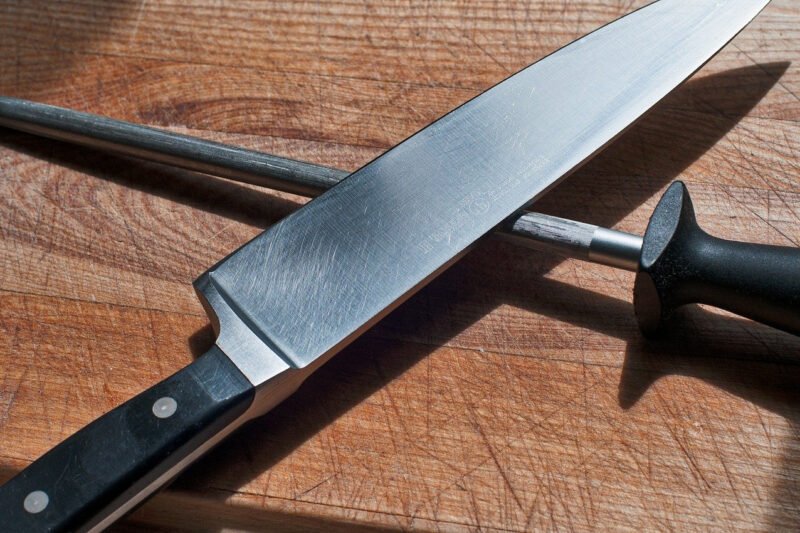
- Honing Rod: Typically a steel or ceramic rod, it realigns the edge between sharpenings.
- Electric Sharpeners: These machines can quickly sharpen knives but may remove more material than necessary if not used carefully.
- Pull-Through Sharpeners: Portable and user-friendly, they often provide a basic sharpening effect.
Choosing the Right Grit
Grit refers to the coarseness of the abrasive surface. Here’s a breakdown of grit levels:
- Coarse (220-400 Grit): Used for repairing damaged edges and reshaping the blade.
- Medium (600-800 Grit): Ideal for general sharpening, removing small nicks, and refining the edge.
- Fine (1000-2000 Grit): Used for honing and polishing, giving a razor-sharp finish.
Basic Sharpening Techniques
Using a Whetstone:
Preparation:
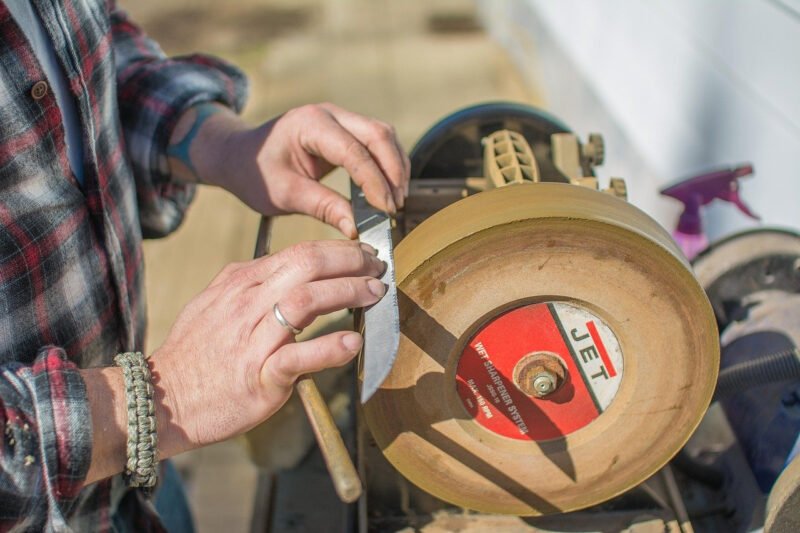
- Soak the whetstone in water for at least 10-15 minutes. This will create a slurry that aids sharpening.
Positioning:
- Place the stone on a non-slip surface.
- Sharpening the Edge:
- Hold the knife at a consistent angle, usually around 15-20 degrees for most kitchen knives.
- Start from the heel, dragging the blade towards you across the stone, ending at the tip.
- Alternate sides after a few strokes to ensure even sharpening.
Using a Honing Rod:
Angle:
- Hold the rod vertically.
Alignment:
- Position the knife at a 20-degree angle to the rod.
- Action:
- Draw the knife down the rod, moving from heel to tip. Repeat this action five to ten times on each side.
Advanced Sharpening Techniques
Japanese Water Stones:
- Slightly different from Western whetstones, these require soaking but can produce a sharper edge due to finer grits available.
- Alternate strokes between coarse and fine stones, using a consistent angle.
Stropping:
- After sharpening, use a leather strop to remove any burrs and polish the edge. Apply a small amount of honing compound to enhance the effect.
Maintaining Your Knives
Cleaning
Avoid using abrasive materials that can scratch the blade. Gently wash with warm, soapy water, and dry immediately to prevent rust.
Storage
A knife block, magnetic strip, or blade guards can protect the edges. Avoid tossing knives into drawers where they may collide with other utensils.
Frequent Maintenance
Regular honing can prolong the time between sharpening sessions. Make it a habit to hone your knives after each use.
Recognizing When to Sharpen
- If the knife feels dull when cutting, requires more pressure to slice, or produces jagged edges on food, it’s time to sharpen.
Common Mistakes in Knife Sharpening
- Improper Angle: Maintaining the wrong angle can result in a poorly sharpened blade or damage.
- Overusing Electric Sharpeners: These can remove too much material quickly, shortening the knife’s lifespan.
- Skipping the Honing Step: Many believe sharpening is sufficient. Regular honing is crucial for maintaining edge alignment.
Final Tips for Effective Knife Sharpening
- Be Consistent with Pressure: Apply even pressure to avoid uneven edges.
- Stay Focused: Concentrate on the process rather than rushing to complete the job.
- Practice: Like any other skill, knife sharpening improves with practice. Don’t hesitate to sharpen on scrap materials.
Conclusion
Mastering the art of knife sharpening can enhance your culinary skills and prolong the life of your kitchen tools. By understanding knife anatomy, selecting the right tools, and practicing proper techniques, you can achieve and maintain a razor-sharp edge. Regular maintenance and the right sharpening techniques are essential for any home cook looking to improve their cooking efficiency and knife performance.