

Understanding Knife Sharpening Basics
Sharpening a knife involves refining the blade’s edge to improve cutting precision and efficiency. A dull knife can lead to a multitude of problems in the kitchen, from safety hazards to inefficient food preparation. To fully grasp the knife sharpening process, several key concepts must be understood.
Blade Anatomy
Before you grab a sharpening tool, it’s vital to know your knife’s anatomy. The key components include:
- Edge: The sharpened portion of the blade responsible for cutting.
- Spine: The top, thicker part of the blade.
- Heel: The rear end of the blade useful for cutting and slicing through tougher materials.
- Tip: The point of the knife used for detailed cuts.
- Belly: The curved area between the heel and the tip, enabling rocking motions.
Understanding these elements helps you identify which areas might need your attention during sharpening.
Sharpening vs. Honing
It’s important to distinguish between sharpening and honing. Honing realigns the blade’s edge without removing a significant amount of material. Tools like honing rods or steel are commonly used. Sharpening removes material from the blade to achieve a more acute edge, which can be accomplished using various tools.
Choosing the Right Sharpening Tools
Selecting the right tool is crucial to achieving optimal sharpness. Here are some popular options:
1. Whetstone/Sharpening Stone
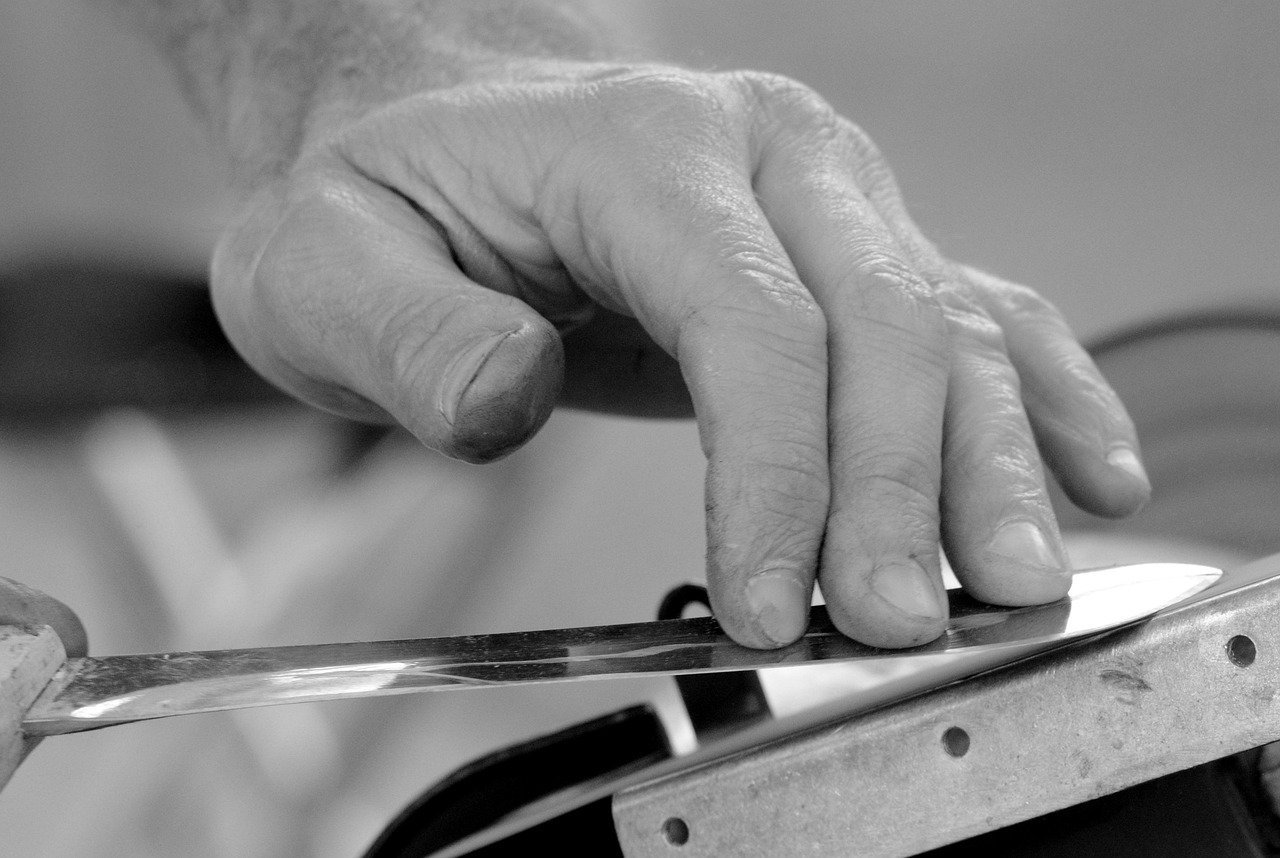
A traditional method for sharpening, whetstones come in different grits (coarse, medium, and fine). They require a bit of practice but yield excellent results.
How to Use:
- Soak the stone: For water stones, soak in water for 10–15 minutes.
- Angle: Hold the knife at a consistent angle (15° to 20°).
- Sharpening Motion: Start from the heel and move toward the tip in a sweeping motion, maintaining the angle.
2. Electric Knife Sharpeners
Electric sharpeners are convenient and often provide fast results. They usually have preset angles, making them user-friendly.
How to Use:
- Insert the blade: Follow manufacturer instructions to position the knife.
- Turn it on: The machine will sharpen as you pull the knife through the slots.
3. Manual Pull-Through Sharpeners
These compact devices feature two slots for sharpening and honing. They are simple to use but may not yield as fine an edge as whetstones.
How to Use:
- Insert the knife: Pull through the designated slots, applying light pressure.
4. Honing Rod
Ideal for maintaining an edge rather than sharpening, honing rods are great for everyday touch-ups.
How to Use:
- Hold the rod vertically: Place the tip on a stable surface.
- Angle the knife: Position the knife at a 15°–20° angle against the rod.
- Swipe down: Glide the knife down the rod, alternating sides.
Step-by-Step Sharpening Process
Step 1: Preparing Your Workspace
Ensure your workspace is clean and clutter-free. Set out your sharpening tool, a damp cloth, and if using a whetstone, a bowl of water.
Step 2: Determine Blade Angle
Most kitchen knives have a 20° angle, but specialty Japanese knives may require a 15° angle. Use an angle guide if necessary.
Step 3: Sharpen Using Your Chosen Tool
- For a whetstone, start with the coarse side to reshape the blade. Work on one side for about 10–15 strokes before switching to the other side.
- For an electric sharpener, simply guide the knife through the designated slots as described earlier, using the requested number of passes.
- For a manual sharpener, repeat the pull-through process until you feel a difference.
- For a honing rod, maintain the angle and swipe 5–10 times on each side.
Step 4: Testing Sharpness
After sharpening, you can test the blade’s sharpness using a piece of paper. A well-sharpened knife will cut cleanly through the paper without tearing.
Maintenance Tips for Knife Longevity
To ensure your knife remains sharp longer, follow these maintenance practices:
1. Proper Storage
Store knives in a block, magnetic strip, or knife sheath to protect the blade edge from being dulled by other utensils.
2. Regular Honing
Incorporate honing into your routine after every few uses to keep the edge aligned, decreasing the need for frequent sharpening.
3. Use a Cutting Board
Always use a wood or plastic cutting board rather than glass or stone surfaces, which can dull the edge quickly.
4. Avoid the Dishwasher
Washing knives in a dishwasher can cause dulling and damage. Hand wash with warm, soapy water and dry immediately.
Common Mistakes to Avoid
Avoid these common pitfalls for optimal knife care:
1. Using the Wrong Angle
Always maintain the appropriate sharpening angle. An incorrect angle can damage the blade.
2. Excessive Pressure
Applying too much pressure while sharpening can remove too much material or result in an uneven edge. Use light and even pressure.
3. Sharpening Frequently
Sharpening a knife too frequently can wear down the blade. Regular honing is usually sufficient between sharpening sessions.
4. Neglecting Maintenance
Failing to hone and store knives properly can lead to increased dullness and damage over time.
Conclusion: Fine-Tuning Your Technique
The art of knife sharpening is both a skill and science, with practice improving your technique significantly. Regular practice using the correct methods and tools will yield excellent results, making your culinary experiences significantly more enjoyable and safe. Embrace this essential aspect of kitchen care to elevate your cooking skills and knife performance.