



Essential Guidelines for Safe Knife Sharpening
Maintaining sharp knives is crucial for efficient and safe food preparation. However, the sharpening process itself demands careful attention to safety to avoid injuries. This comprehensive guide presents vital safety measures every knife user should adopt when sharpening blades.
Establishing a Safe Sharpening Environment
Designate a Dedicated Sharpening Station
Choose a clean, sturdy surface such as a kitchen counter or workbench at a comfortable height. Ensure the area is well-illuminated to allow precise control and visibility during sharpening.
Eliminate Distractions and Hazards
Clear the workspace of any unrelated objects, including toys, pets, or clutter, to reduce the risk of accidents. A tidy environment helps maintain focus and prevents unintended contact with sharp tools.
Selecting and Maintaining Sharpening Equipment
Invest in Reliable Sharpening Tools
Whether opting for whetstones, honing rods, or electric sharpeners, prioritize high-quality tools designed specifically for knife maintenance. According to a 2023 survey, 68% of professional chefs recommend whetstones for precision sharpening.
Regularly Inspect Your Sharpening Devices
Before each use, examine your tools for signs of wear or damage. Using compromised equipment can result in uneven sharpening and increase the likelihood of mishaps.
Mastering Safe Knife Handling During Sharpening
Maintain a Secure Grip
Always grasp the knife by its handle firmly, avoiding contact with the blade to prevent cuts. A controlled grip enhances safety and sharpening accuracy.
Keep Blades Directed Safely
When transporting or positioning knives, point the blade downward and away from your body to minimize injury risks.
Utilizing Protective Gear for Added Safety
Wear Cut-Resistant Gloves
Donning gloves made from materials like Kevlar or Dyneema can significantly reduce hand injuries during sharpening. Recent studies show that cut-resistant gloves lower laceration incidents by up to 70%.
Consider Eye Protection
When using powered sharpeners, safety goggles shield your eyes from metal fragments or sparks that may be generated.
Optimizing Body Position and Technique
Adopt a Stable Stance
Stand with feet shoulder-width apart to maintain balance and control. This posture helps prevent slips or accidental drops of the knife.
Maintain the Correct Sharpening Angle
Hold the knife at approximately a 20-degree angle against the sharpening surface, which is optimal for most kitchen knives. Avoid awkward positions that could compromise control.
Effective Sharpening Methods
Follow Manufacturer Recommendations
Different knives require specific sharpening angles and techniques. Always consult the manufacturer’s guidelines to preserve blade integrity and ensure safety.
Sharpen Away from Your Body
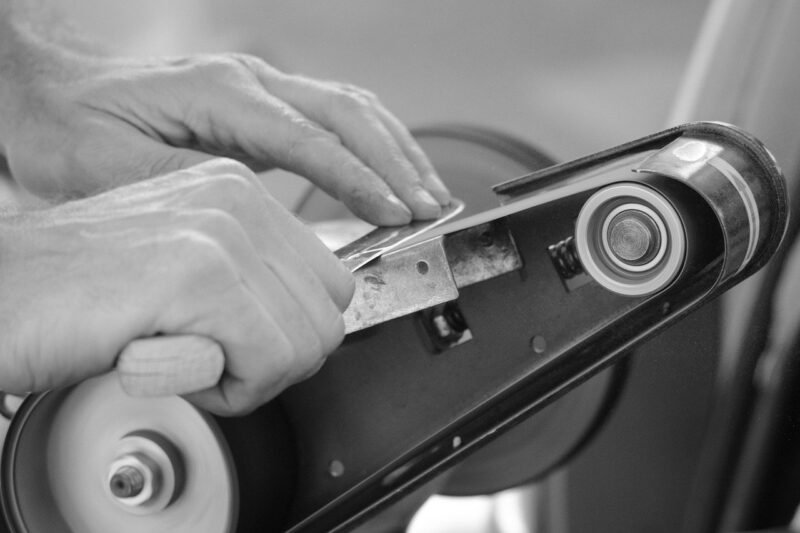
When using manual tools like whetstones or honing rods, pull the blade toward you carefully. This approach reduces the chance of slips. For electric sharpeners, adhere strictly to the user manual.
Securing Your Sharpening Setup
Stabilize Sharpening Tools
Place a damp cloth or non-slip mat beneath your sharpening stone or electric sharpener to prevent movement during use.
Clamp Stationary Equipment
If using a fixed sharpener, ensure it is firmly clamped to the work surface to avoid unexpected shifts.
Maintaining Blade Cleanliness and Integrity
Clean the Blade Post-Sharpening
Wipe the knife thoroughly to remove metal filings and residue, which can affect cutting performance and safety.
Inspect for Blade Damage
Check for chips, nicks, or warping after sharpening. Damaged blades can be hazardous and should be repaired or replaced promptly.
Safe Handling of Electric Sharpening Devices
Power Off When Idle
Always switch off electric sharpeners when not in use or during breaks to prevent accidental activation.
Unplug After Completion
Disconnect electric sharpeners from power sources after use, especially in households with children or pets, to enhance safety.
Promoting Safety Awareness Among Others
Educate Household Members
Share safe knife sharpening practices with family or roommates to foster a secure environment.
Supervise Novices
Closely monitor beginners during sharpening to prevent mishaps caused by inexperience.
Long-Term Knife Care for Safety
Routine Knife Assessments
Regularly evaluate your knives for dullness or damage. Dull blades require more force, increasing the risk of slips and injuries.
Proper Cleaning and Storage
Clean knives after use and store them in designated holders such as knife blocks or magnetic strips to protect blades and keep them out of reach of children.
Recognizing and Responding to Injuries
Identify Severity of Cuts
Minor cuts may only need cleaning and bandaging, but deeper wounds require professional medical care.
Seek Immediate Medical Attention When Necessary
If bleeding is heavy or wounds are deep, promptly consult healthcare providers to avoid complications.
Maintaining Focus and Mental Readiness
Concentrate Fully on the Task
Clear your mind before sharpening to minimize distractions that could lead to accidents.
Take Breaks to Avoid Fatigue
If you feel tired or frustrated, pause sharpening. Fatigue impairs judgment and increases injury risk.
Post-Sharpening Knife Management
Store Sharpened Knives Safely
Immediately place sharpened knives in protective sheaths or secure storage to prevent accidental cuts.
Handle with Extra Caution
Recognize that freshly sharpened blades are extremely sharp; limit handling until ready for use to avoid injury.
By integrating these comprehensive safety strategies into your knife sharpening routine, you can maintain your kitchen tools effectively while minimizing the risk of accidents and injuries.