

Step-by-Step: Safe Knife Sharpening Techniques You Can Trust
Understanding Knife Sharpening
Knife sharpening is essential for maintaining the performance and longevity of your knives. Dull knives are not only inefficient but can also be dangerous, as they require more force to cut through materials, leading to accidents. To sharpen knives safely, it is important to utilize the right techniques and tools. Below is a comprehensive guide, categorized into sections for clarity.
Choosing the Right Tools
Sharpening Stones
- Whetstones: These come in various grits, with coarser stones (around 200-600 grit) used for repairing edges and finer stones (1000-3000 grit) for honing.
- Diamond Stones: Durable and quicker in sharpening, diamond stones are less likely to wear down over time. Use them according to their grit rating.
- Ceramic Stones: These provide a fine edge and are used more for maintenance than for sharpening dull knives.
Manual vs. Electric Sharpeners
- Manual Sharpeners: These include whetstones and pull-through sharpeners. They offer you control over the angle and pressure applied.
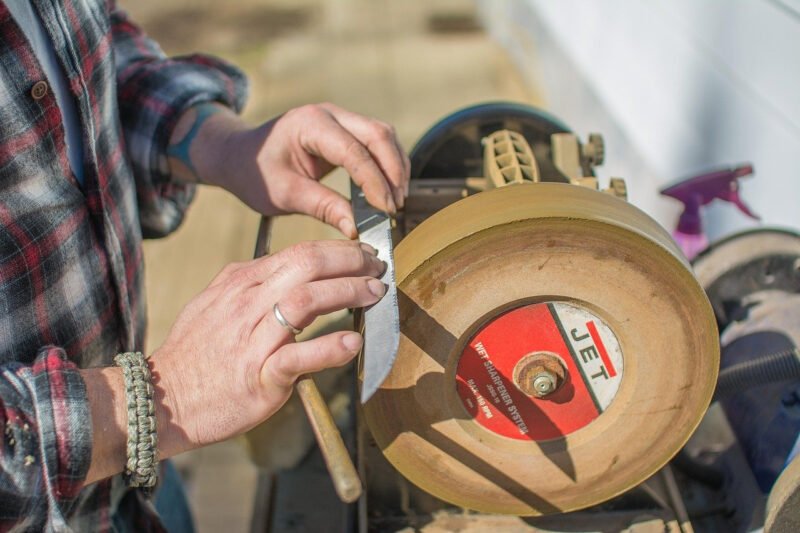
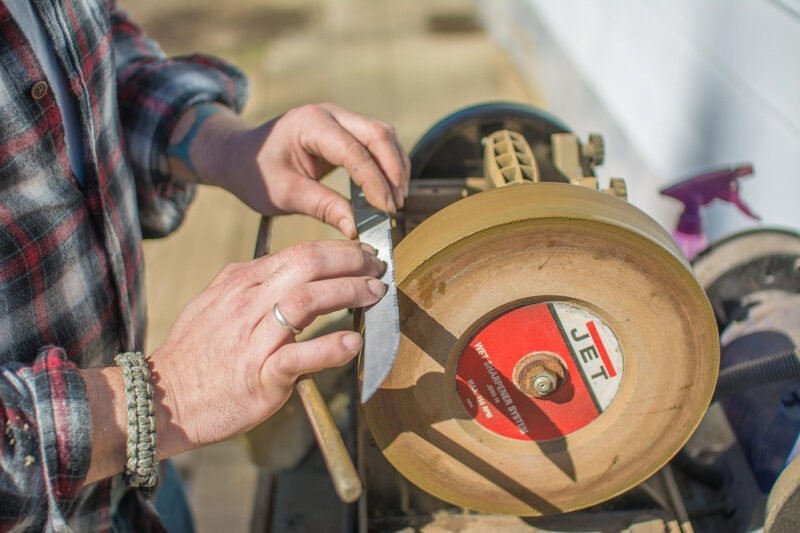
- Electric Sharpeners: While faster, they can be less forgiving on blade angles. Use these with caution to avoid uneven sharpening.
Honing Rods
Honing rods are used to realign the blade edge between sharpenings rather than removing material. They are best utilized after each use of the knife.
Preparing to Sharpen
Safety First
- Use a Non-slip Surface: Place your sharpening device on a stable, non-slip surface to prevent slipping.
- Wear Cut-resistant Gloves: Always wear cut-resistant gloves to protect your hands from accidental cuts.
- Clear the Area: Remove anything around your workstation that can cause distractions or accidents.
Cleaning the Knife
Before sharpening, clean the knife with warm soapy water to remove any grime or food particles. Dry it completely with a soft cloth to prevent slipping during the sharpening process.
Knife Sharpening Techniques
Technique #1: Using a Whetstone
- Soak the Whetstone: If you’re using a water stone, soak it in water for about 10-15 minutes before use.
- Angle the Blade: Hold the knife at approximately 15-20 degrees against the stone.
- First Stroke: Starting at the heel of the blade, apply light pressure and glide the blade down the stone toward the tip. Maintain a consistent angle.
- Even Strokes: Repeat the motion 5-10 times on one side, then flip the knife and repeat on the other side.
- Check the Edge: After sharpening both sides, inspect the edge for a consistent angle and burrs.
- Polishing: Finish with a finer grit stone to polish the blade and remove any burrs.
Technique #2: Using a Diamond or Ceramic Stone
- Prepare the Stone: Ensure the diamond or ceramic stone is clean.
- Hold the Knife: Similar to the whetstone, maintain a 15-20 degree angle.
- Gentle Push: With light pressure, push the knife away from you along the length of the stone, covering the entire blade.
- Alternate Sides: Alternate between sides after each stroke or after several strokes for a balanced edge.
- Wipe the Blade: Remove metal filings periodically with a damp cloth to ensure effective sharpening.
Technique #3: Using a Pull-Through Sharpener
- Place on a Stable Surface: Ensure the sharpener is stable before use.
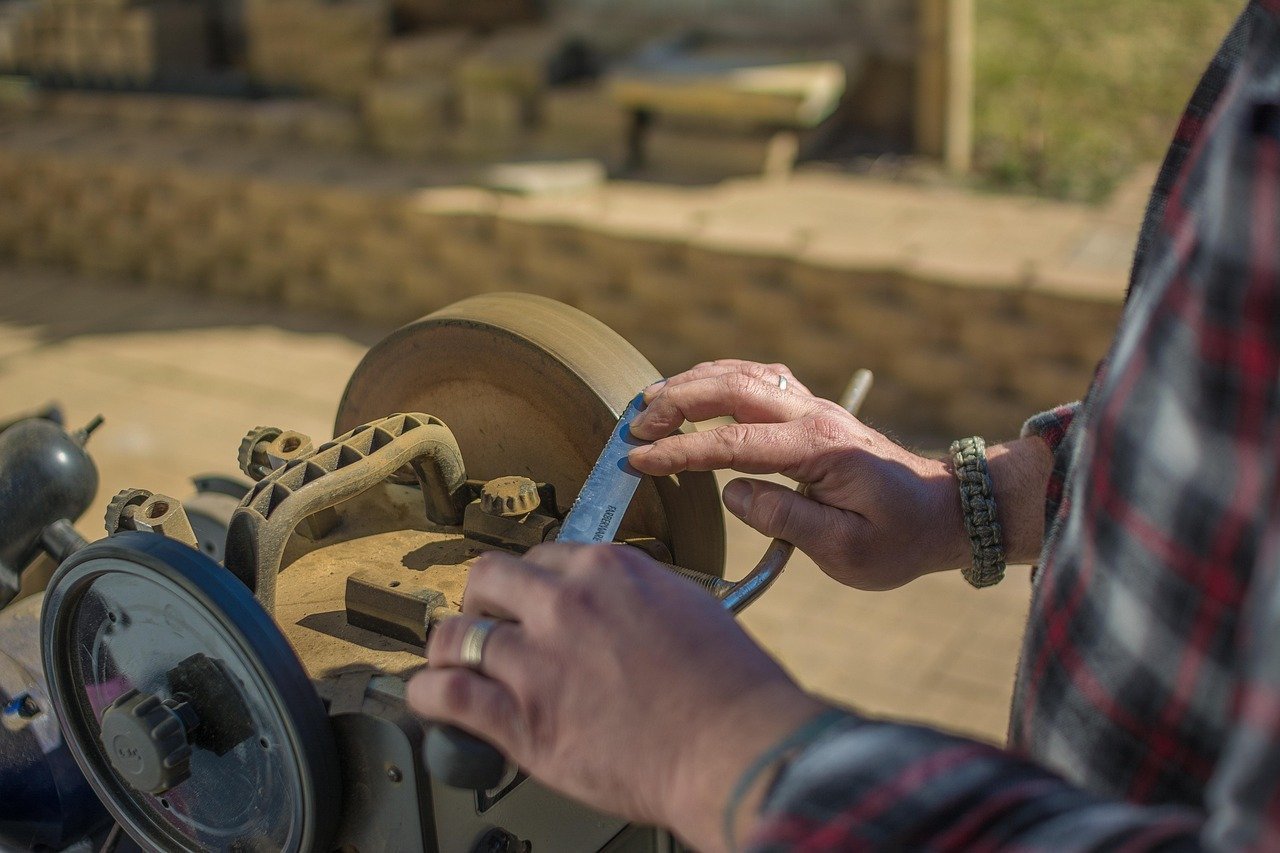
- Insert the Knife: Slide the blade into the designated slot, ensuring it is positioned correctly.
- Pull Through: Gently pull the knife through the sharpener from heel to tip. Repeat as needed according to the sharpness desired.
- Clean the Knife: Wipe the blade after sharpening to remove metal shavings and debris.
Honing Your Knife
Using a Honing Rod
- Position the Rod: Hold the honing rod vertically with a non-slip surface or stable hold.
- Angle the Blade: Position the knife at a similar angle (15-20 degrees).
- Swipe the Blade: Starting at the heel, swipe the blade down the honing rod while maintaining the angle. Repeat 5-10 times on each side.
- Regular Maintenance: Hone your knives often to maintain their sharpness without needing to sharpen frequently.
Assessing Sharpness
The Paper Test
An effective way to check sharpness is the paper test. Hold a piece of paper vertically and try slicing through it. If the knife cuts cleanly without tearing, it’s sharp.
The Tomato Test
Another test is to slice through a tomato. A sharp knife should easily penetrate and slice without excessive pressure.
Caring for Your Knives
Regular Maintenance
- Hone Regularly: Incorporate honing rods into your knife maintenance routine to maintain sharpness.
- Clean Immediately After Use: Prevent rust and grime by washing and drying knives right after use.
Proper Storage
- Knife Blocks: These allow proper air circulation and protect the blade edges.
- Magnetic Strips: Great for saving counter space while providing easy accessibility.
- Blade Guards: If using drawers, consider blade guards to prevent dulling.
Common Mistakes to Avoid
- Using Too Much Pressure: Apply just the right amount of pressure. Too much can damage the blade or stone.
- Neglecting Knife Angle: Consistency in the angle is crucial for effective sharpening.
- Skipping Maintenance: Regular honing can save you from the need for frequent sharpening.
Conclusion
By mastering these knife sharpening techniques, you can enhance your culinary experience and ensure your knives stay effective and safe to use. Regular practice and the right tools will lead to remarkable results, ensuring your knives are always ready to perform at their best.