


Understanding Oil Stones
Oil stones, also known as oil whetstones, are essential tools for any knife enthusiast or kitchen professional. Unlike water stones that require water for lubrication, oil stones use specially formulated honing oils. The primary benefit of using an oil stone lies in its durability and effectiveness in sharpening knives to a keen edge. Understanding oil stones entails recognizing their structure, types, and applications.
Types of Oil Stones
Oil stones are predominantly made of abrasive materials such as aluminum oxide and silicon carbide. Each variation has different performance characteristics.
Aluminum Oxide Stones: Durable and versatile, these stones provide a balanced sharpening experience. They are often used for general-purpose knife sharpening. Their grit sizes can range from coarse to fine.
Silicon Carbide Stones: Known for their aggressive cutting power, silicon carbide stones are ideal for sharpening hard steels. They cut faster than aluminum oxide but can wear out more quickly.
Natural Oil Stones: Rare and often expensive, natural oil stones such as Arkansas stones are prized for their ability to produce a razor-sharp edge. They require more maintenance and care compared to synthetic stones.
Selecting the Right Grit Stone
Choosing the right grit for your oil stone is crucial based on the condition of your knife blade.
Coarse Grit (100-400): Ideal for repairing damaged edges and removing substantial material. Use coarse stones for dull knives or those with nicks.
Medium Grit (600-1000): This grit range is suitable for general sharpening. It smooths out the edges and prepares the blade for final honing.
Fine Grit (1200 and above): Perfect for honing and polishing the edge to achieve a razor-sharp finish. Fine grit stones refine the edge and improve cutting performance.
Preparing Your Workstation
Creating an efficient sharpening space helps streamline the sharpening process. Follow these steps:
Gather Your Tools: You will need your oil stone, knife, honing oil, and a clean cloth. Ensure the workspace is well-lit and stable.
Choose the Right Oil: Selecting the appropriate honing oil is essential to prevent clogging the stone’s pores. Mineral oil or specially formulated honing oils are typical choices.
Clamping the Stone: While not mandatory, securing the oil stone to a stable surface can enhance safety. It minimizes movement, allowing you to apply consistent pressure during sharpening.
Applying Honing Oil
Before sharpening, it’s essential to prepare the stone with honing oil. Apply a few drops of oil evenly across the stone’s surface. The oil serves several purposes:
Lubrication: It prevents friction that can cause heat buildup and damage to both the stone and the knife.
Residue Removal: Oil aids in removing the metal particles generated during sharpening and keeps the stone clean.
Sharpening Technique
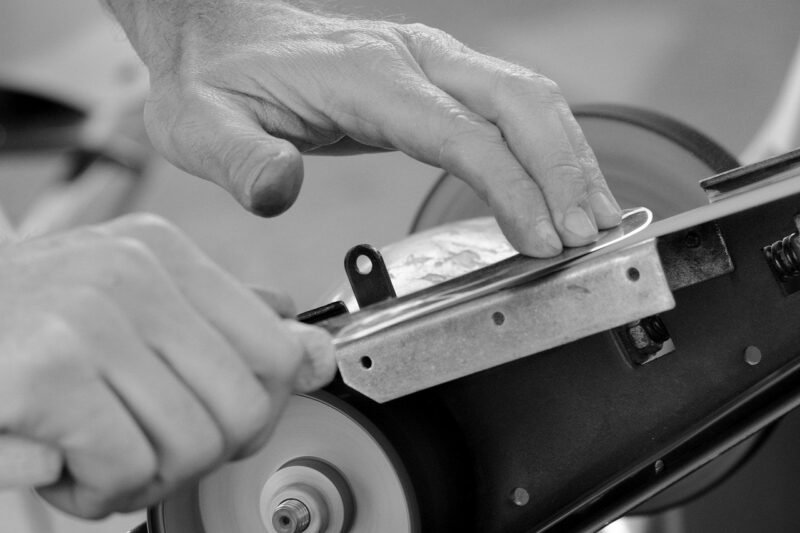
Mastering the sharpening technique involves understanding the knife’s angle. Here’s a step-by-step guide:
Determine the Angle: A common angle for kitchen knives ranges from 15 to 20 degrees. Specialized blades like Japanese knives may require sharper angles for optimal results.
Begin with the Coarse Stone: Start with a coarse grit if your blade is significantly dull. Place the knife at your desired angle against the stone.
Sharpening Motion: Push the knife across the stone in a sweeping motion, starting from the heel and moving towards the tip. Alternate sides after each stroke to maintain balance.
Pressure Application: Apply moderate pressure while sharpening, allowing the abrasive surface to work productively. Avoid pressing too hard, as this can lead to uneven sharpening.
Check for Burrs: After sharpening a few strokes, feel for a burr— a slight lip of metal on the opposite edge. This indicates that you’re effectively removing material.
Switch to Medium and Fine Grit: After achieving a burr, move to the medium grit to refine the edge. Finally, use the fine grit for polishing, following the same technique of alternating sides.
Finishing Techniques
After using fine grit, refine your edge further by utilizing a strop or a leather piece. This process aligns the microscopic teeth of the blade for a sharper finish and removes any remaining burrs.
Maintenance of Oil Stones
Taking care of your oil stones prolongs their lifespan and efficiency. Here are some maintenance tips:
Cleaning the Stone: After sharpening, wipe the stone with a clean cloth to remove metal shavings and oil. Periodically, use a soft brush to clean deep pores.
Regular Flattening: As usage continues, the stone’s surface may develop unevenness. Flatten the stone using a rough surface (like another stone or a flattening stone) to maintain its efficacy.
Oil Application: Reapply honing oil before each sharpening session to ensure optimum lubrication.
Troubleshooting Common Issues
Sharpening with oil stones may present challenges. Here’s how to address common problems:
Too Much Heat: If you notice the blade getting hot, reduce pressure or pause to cool it down. Excessive heat can ruin the temper of the steel.
No Burr Formation: If a burr doesn’t form, check your angle and ensure you are applying adequate pressure.
Uneven Edge: This often results from inconsistent angles. Focus on keeping a steady angle throughout the sharpening process.
Enhancing Your Skills
Sharpening knives with oil stones is an art requiring practice and patience. Engage in regular sharpening sessions and experiment with various techniques and angles. Consider joining online forums or local workshops to share experiences and gain insights from seasoned sharpeners.
Conclusion to Avoid
Though a detailed guide, avoid summarizing or concluding to provide continuity. Maintaining focus on the discipline of sharpening encourages consistent practice and expertise development.