


How to Sharpen Your Knife: A Step-by-Step Guide
Understanding Knife Types
Before you begin sharpening, it’s essential to understand the type of knife you are working with. Common types of kitchen knives include Chef’s knives, paring knives, and serrated knives. Each knife has its own edge design and material which can require different sharpening techniques.
Tools Needed for Sharpening
- Whetstone: A stone that comes in various grits for sharpening and honing blades.
- Honing Steel: A long rod used primarily to hone the edge between sharpenings.
- Knife Sharpener: Electric or manual devices specifically designed for sharpening knives.
- Cloth: To wipe down the blade and keep your work area clean.
- Water: If using a whetstone, you may need water to lubricate the stone.
Step-by-Step Sharpening Process
Step 1: Setting Up Your Workspace
Choose a clean, flat surface to work on. Ensure you have good lighting and that you can comfortably use both hands to hold the knife and the sharpening tool.
- Place a damp cloth or paper towel under the whetstone to prevent slipping.
- Gather all your tools and keep them within easy reach.
Step 2: Understanding the Angle
Most kitchen knives require a sharpening angle between 15 to 20 degrees. Thinner blades, such as Japanese knives, typically use a lower angle (15 degrees), while thicker blades use higher angles (20 degrees).
- Tip: You can use a protractor or an angle guide to ensure accuracy if you’re inexperienced.
Step 3: Preparing the Whetstone
If you are using a whetstone, it’s crucial to prepare it properly.
Soak the Whetstone: Immerse the stone in water for about 10-15 minutes. This helps to create a slurry that aids in the sharpening process.
- Positioning: Lay the stone on a towel or non-slip surface with the coarse side facing up initially.
Step 4: Start Sharpening
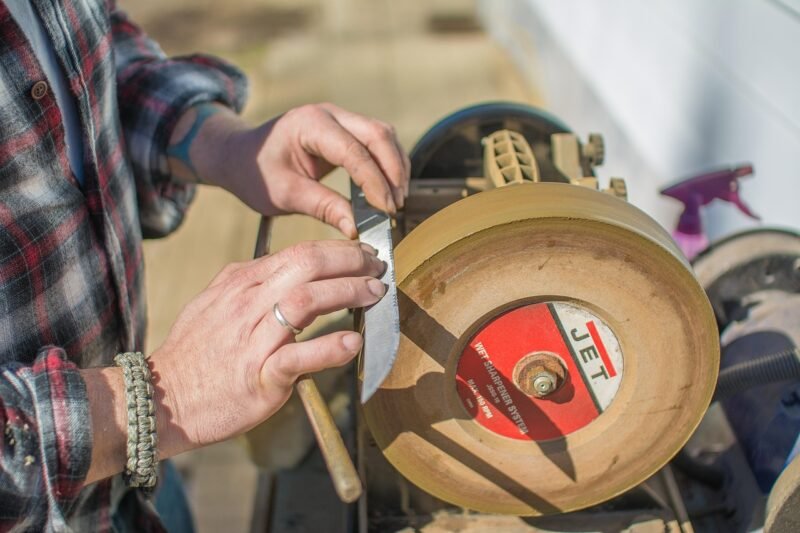
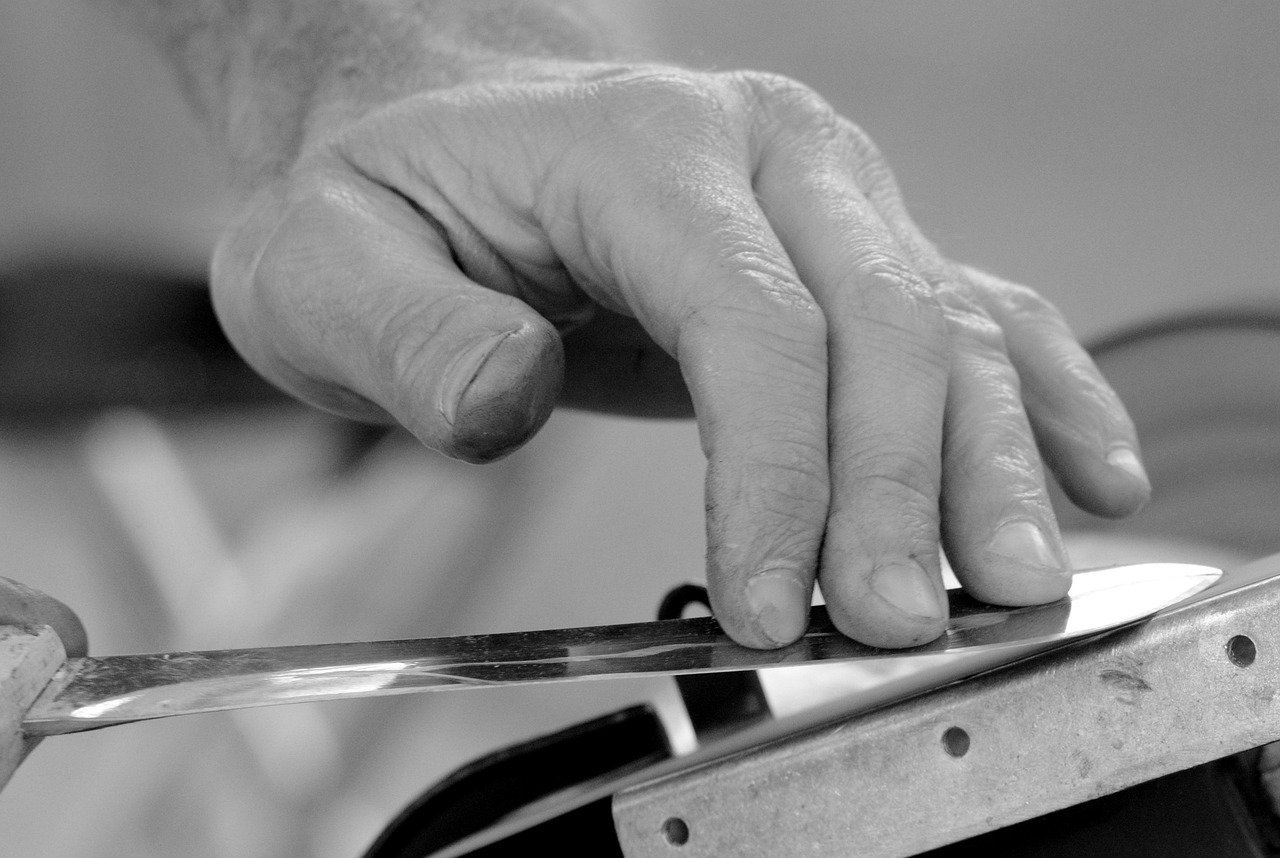
Position the Knife: Hold the knife at the desired angle against the whetstone. Begin with the side of the blade that faces you.
Sharpening Motion:
- Starting from the heel (the part of the blade closest to the handle), apply light pressure and push forward while dragging the blade down the stone.
- The entire length of the blade should contact the stone.
Repeat: Work the blade from heel to tip for about 6-8 strokes. Then flip the knife and repeat the process on the other side.
- Checking Your Progress: After sharpening both sides, test the edge. A dull knife will struggle to cut paper cleanly. If it’s still dull, repeat sharpening on the coarse side.
Step 5: Fine Tuning with the Fine Grit
Switch the Side: Once you’ve sharpened both sides with the coarse grit, flip the whetstone and use the finer grit side, which will refine the edge.
- Repeat the Process: Follow the same sharpening motion, using less pressure this time (3-5 strokes per side). The finer grit will provide a polished and sharper edge.
Step 6: Honing the Edge
Use Honing Steel: After sharpening, use a honing steel to realign the edge. Hold the steel vertically and place the tip of the steel on a stable surface.
Angle Maintenance: Hold the knife at a 15 to 20-degree angle against the steel and draw the knife downwards towards you, running the blade down the steel from heel to tip.
- Repeat on Both Sides: Do about 5-10 strokes on each side of the blade.
Step 7: Cleaning the Knife
Once you have sharpened your knife, it’s essential to clean it to remove any metal filings and debris.
Wash with Soap and Water: Use warm soapy water and a soft cloth to clean the blade.
- Dry thoroughly: Wipe the blade dry immediately to avoid rust and to maintain its quality.
Step 8: Testing the Sharpness
To ensure your knife is sharp enough, conduct a simple test.
Paper Test: Try slicing a piece of paper. A sharp knife will cut easily and cleanly without tearing.
- Tomato Test: A reliable test for kitchen knives is to try slicing a tomato. The knife should cut through the skin and the flesh with minimal effort.
Maintaining Your Knife’s Sharpness
Regular Use of Honing Steel: Use honing steel before each use to maintain the edge.
Proper Storage: Store your knives in a block or on a magnetic strip to keep their edges protected.
Avoid Dishwashers: Always wash by hand and keep your knives away from harsh chemicals and environments.
- Sharpen Regularly: Depending on usage, a good knife should be sharpened every few months or based on wear.
Conclusion
Caring for your knives with proper sharpening techniques enhances your cooking experience and preserves your tools. By following the steps outlined, you can develop the skill to maintain an exceptionally sharp edge that will make prep time efficient and enjoyable. Empower yourself with the knowledge of knife care, and unleash your culinary potential with the finest tools at your disposal!